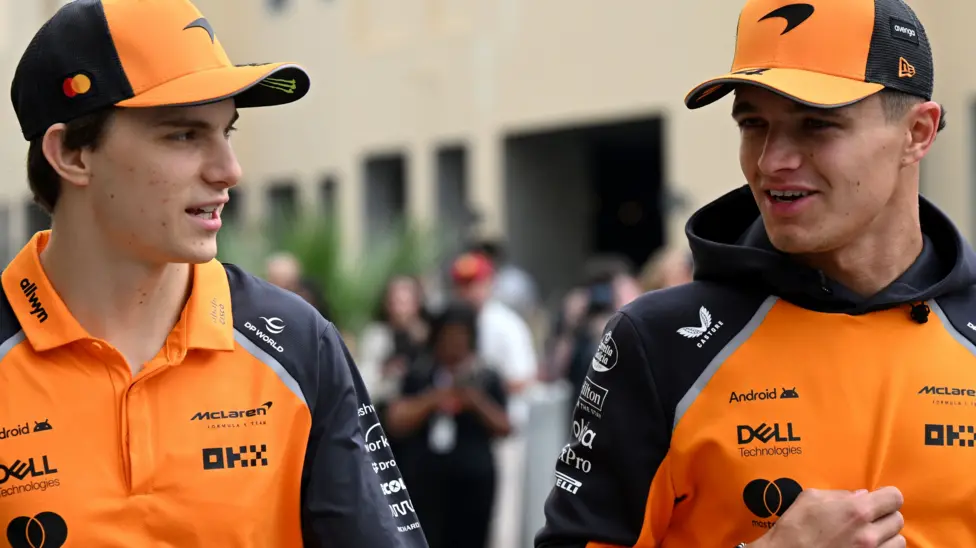

As the Formula 1 season approaches its dramatic conclusion, McLaren has confirmed that it is prepared to employ team orders during the Abu Dhabi Grand Prix, signaling a strategic approach to maximize championship points and optimize race outcomes. The announcement underscores the high-stakes nature of the final race in the F1 calendar, where teams often make calculated decisions to secure constructors’ and drivers’ positions in tightly contested standings.
Team orders — directives given by a team to its drivers to influence race positions — have long been a controversial but critical component of Formula 1 strategy. McLaren’s readiness to implement such measures reflects the competitive intensity within the midfield and the ongoing battle to secure podium finishes and points that could significantly impact both the drivers’ and constructors’ championship rankings.
In recent races, McLaren has demonstrated strong performance, with both drivers consistently challenging rivals for top positions. However, Abu Dhabi’s Yas Marina Circuit presents unique challenges, including variable tire strategies, a tight street circuit layout, and the potential for late-race incidents that can influence outcomes dramatically. Team orders may be used to manage these variables, ensuring that the team maximizes points while minimizing risks associated with intra-team battles.
McLaren’s team principal emphasized that decisions would be guided by a combination of race strategy, championship context, and real-time developments on track. “Our priority is the team’s overall performance and ensuring that both drivers are supported strategically,” he stated. “If circumstances demand coordination to optimize results, we will make those calls for the benefit of the team.”
The prospect of team orders adds a layer of intrigue for fans and pundits. While such strategies can sometimes provoke controversy, they are widely recognized as an essential tool for teams managing multiple competitive drivers. In McLaren’s case, the approach may involve instructing one driver to hold position, allow a faster teammate to pass, or optimize tire and fuel management in response to rivals’ strategies. These tactical decisions often occur in split seconds and require precise communication between drivers, engineers, and strategists.
From a broader perspective, McLaren’s willingness to deploy team orders reflects the evolution of modern Formula 1, where strategic coordination and data-driven decision-making are as vital as driver skill. The team’s approach also highlights the delicate balance between individual ambition and collective success — a recurring theme in a sport where championships can be won or lost by a single point.
As Abu Dhabi promises high temperatures, variable lighting conditions, and potential late-race safety cars, McLaren’s readiness to use team orders could prove decisive. Analysts predict that these decisions will be critical not only for podium positions but also for shaping the team’s standing in next year’s championship preparations, sponsorship visibility, and long-term competitive momentum.
Ultimately, McLaren’s announcement serves as a reminder of the strategic depth of Formula 1 racing. Beyond raw speed, success at Abu Dhabi will depend on teamwork, tactical execution, and the ability to make high-pressure decisions in real time. Fans can expect an intense, closely fought race where every maneuver, instruction, and split-second decision may have lasting implications for both drivers and the team.