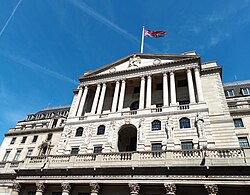

In a significant policy shift aimed at supporting lending and safeguarding economic stability, the Bank of England (BoE) has announced a relaxation of bank capital requirements while simultaneously highlighting a new set of risks emerging within the financial system. The move reflects the central bank’s attempt to maintain resilience amid ongoing macroeconomic uncertainty, inflation pressures, and a rapidly evolving global market landscape.
The BoE’s decision focuses on adjusting the countercyclical capital buffer (CCyB) and providing targeted relief to banks facing tightening liquidity conditions. By easing capital requirements, the central bank aims to ensure that financial institutions retain the capacity to lend to businesses and households during a period of weaker economic momentum. The policy shift also acknowledges the stress banks face from higher interest rates, volatile funding markets, and global credit constraints.
This easing is particularly timely, as UK banks are navigating a complex environment shaped by slower growth, rising default risks among consumers and small businesses, and the lingering effects of prolonged inflation. Lower capital requirements will temporarily free up financial resources, giving banks more flexibility to support credit creation and maintain stable lending flows. The central bank emphasized, however, that this is not a signal of systemic weakness but rather a precautionary measure to preserve financial stability.
At the same time, the BoE has warned of new and intensifying financial-system risks. Among the most prominent concerns are vulnerabilities in non-bank financial institutions (NBFIs), including hedge funds, private credit funds, and liability-driven investment (LDI) strategies — the same class of investors at the center of the 2022 gilt market turmoil. Central bank officials noted that leverage in parts of the non-bank sector remains elevated, posing potential spillover risks to the broader financial system if market conditions tighten further.
Another emerging risk comes from global financial fragmentation and geopolitical tensions, which continue to affect asset prices, liquidity conditions, and cross-border capital flows. The BoE highlighted that sudden shifts in global bond yields — driven by policy changes in major economies such as the U.S. and Japan — could amplify stress in UK markets. Additionally, disruptions in commodity markets and supply chains remain a significant threat, with potential to trigger volatility in credit markets and corporate balance sheets.
The central bank also flagged concerns about the rapid growth of private credit markets, where transparency is low and leverage is high. As more companies rely on private financing instead of traditional bank loans, the risk of hidden vulnerabilities rises. Regulators worry that a downturn could expose structural weaknesses, affecting both lenders and borrowers in unpredictable ways.
Despite these warnings, the BoE maintains that the UK banking sector remains fundamentally strong, with adequate liquidity and capital buffers to withstand shocks. The easing of capital requirements, combined with continued supervisory oversight, is intended to strike a balance between supporting economic activity and addressing systemic risk.
As the central bank continues to monitor global and domestic developments, market participants expect further updates in the coming months. For now, the latest measures underscore the BoE’s dual mission: reinforcing financial system resilience while adapting to an increasingly uncertain global economic environment.